Success: Available from stock
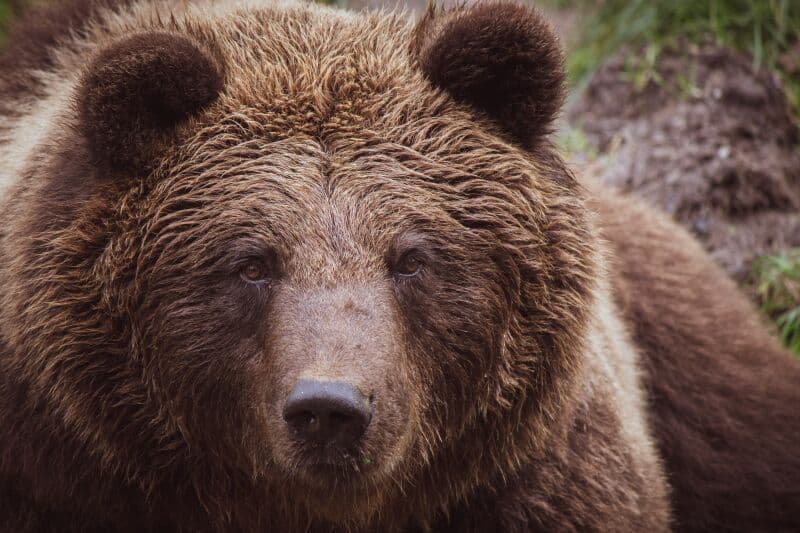
More informationBrown bear
Ursus arctos
Natural diet Brown bear
The brown bear is an omnivorous species with a very diverse diet. For example, they feed on mammals and fish but also plants, berries and more are consumed. Food intake increases during spring/summer months to accumulate enough fat because of hibernation during the winter period.



Feeding advice Brown bear
Feed quantity per day
18%
Sample percentage calculation
If an animal weighs 250 kg and eats 18% of its body weight, it will get
250 x 0.18 = 45 kg feed in total per day
Feed composition
15% Meat and whole prey
5% Fish products
2% Concentrates
60% Leafy greens and cabbages
10% Other vegetables
8% Other
Proportions (fresh product)
0.15 x 45 kg = 6,750 g meat and whole prey
0.05 x 45 kg = 2,250 g fish products
0.02 x 45 kg = 900 g concentrates
0.6 x 45 kg = 27,000 g leafy greens and cabbages
0.1 x 45 kg = 4,500 g other vegetables
0.08 x 45 kg = 3,600 g other
Feeding advice Brown bear
Feed quantity per day
18%
Sample percentage calculation
If an animal weighs 250 kg and eats 18% of its body weight, it will get
250 x 0.18 = 45 kg feed in total per day
Feed composition
15% Meat and whole prey
5% Fish products
2% Concentrates
60% Leafy greens and cabbages
10% Other vegetables
8% Other
Proportions (fresh product)
0.15 x 45 kg = 6,750 g meat and whole prey
0.05 x 45 kg = 2,250 g fish products
0.02 x 45 kg = 900 g concentrates
0.6 x 45 kg = 27,000 g leafy greens and cabbages
0.1 x 45 kg = 4,500 g other vegetables
0.08 x 45 kg = 3,600 g other
Diet Suggestions
Recommended
Variety of whole prey
Variety of meat
Variety of leafy and cabbage vegetables
Not recommended
Fruits
Common diseases
An unbalanced diet may result in one of these more commonly occurring diseases/conditions:
- Arthritis and Skeletal Disease
- Dental Disease
- Urolithiasis
Additional advice
- Divide the “Feed quantity per day” over at least three feeding moments per day.
- More frequent feeding with smaller portion of food more closely matches the natural feeding behaviour.
- The diet should be very diverse to resemble the natural range of plants and food types consumed.
- Bears have different nutritional needs every season. Although fasting days are inappropriate for bears in captivity, the diet should be adapted accordingly to the activity levels to avoid obesity (read more about seasonal fluctuations and hibernation).
- To promote the oral health, it is important to offer the soft food first and then the hard food such as bones and skin.
- Stimulate foraging behaviour by hiding, stacking or hanging the feed (read more about feed enrichment and foraging behaviour).
Diet Suggestions
Recommended
Variety of whole prey
Variety of meat
Variety of leafy and cabbage vegetables
Not recommended
Fruits
Common diseases
An unbalanced diet may result in one of these more commonly occurring diseases/conditions:
- Arthritis and Skeletal Disease
- Dental Disease
- Urolithiasis