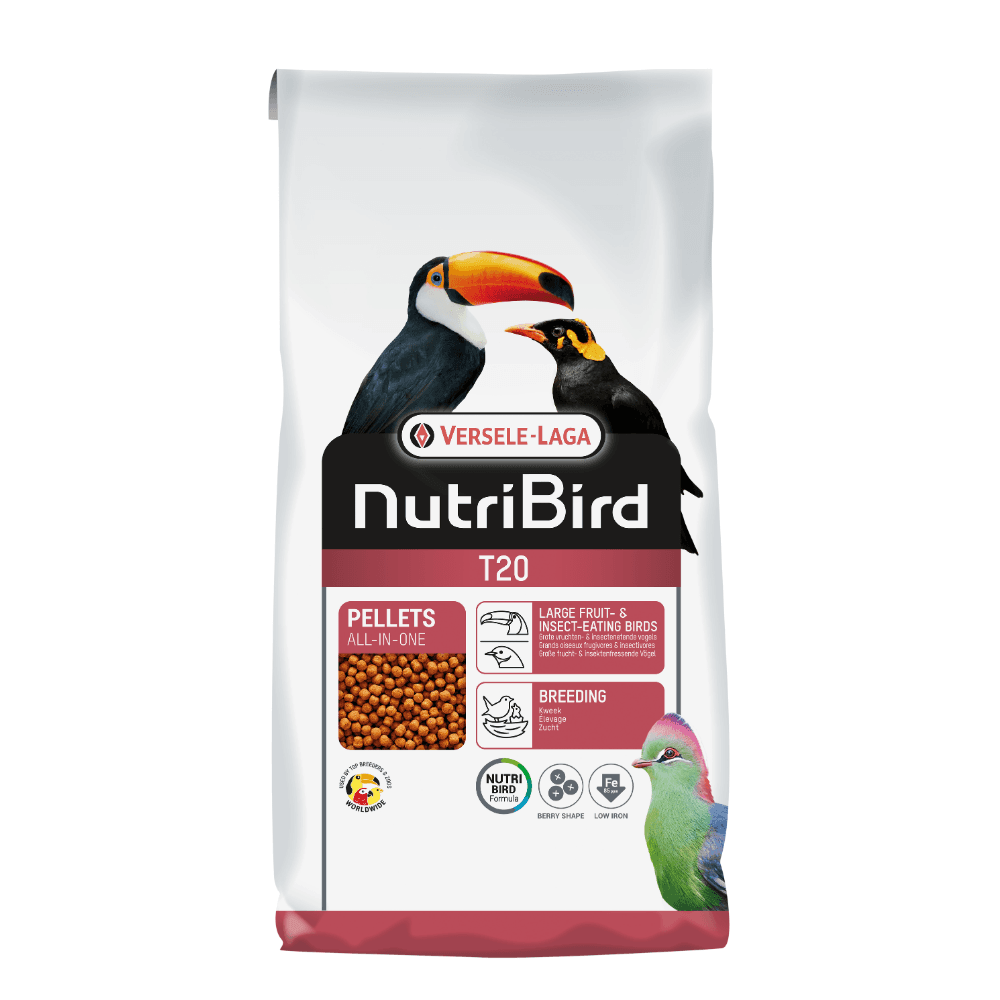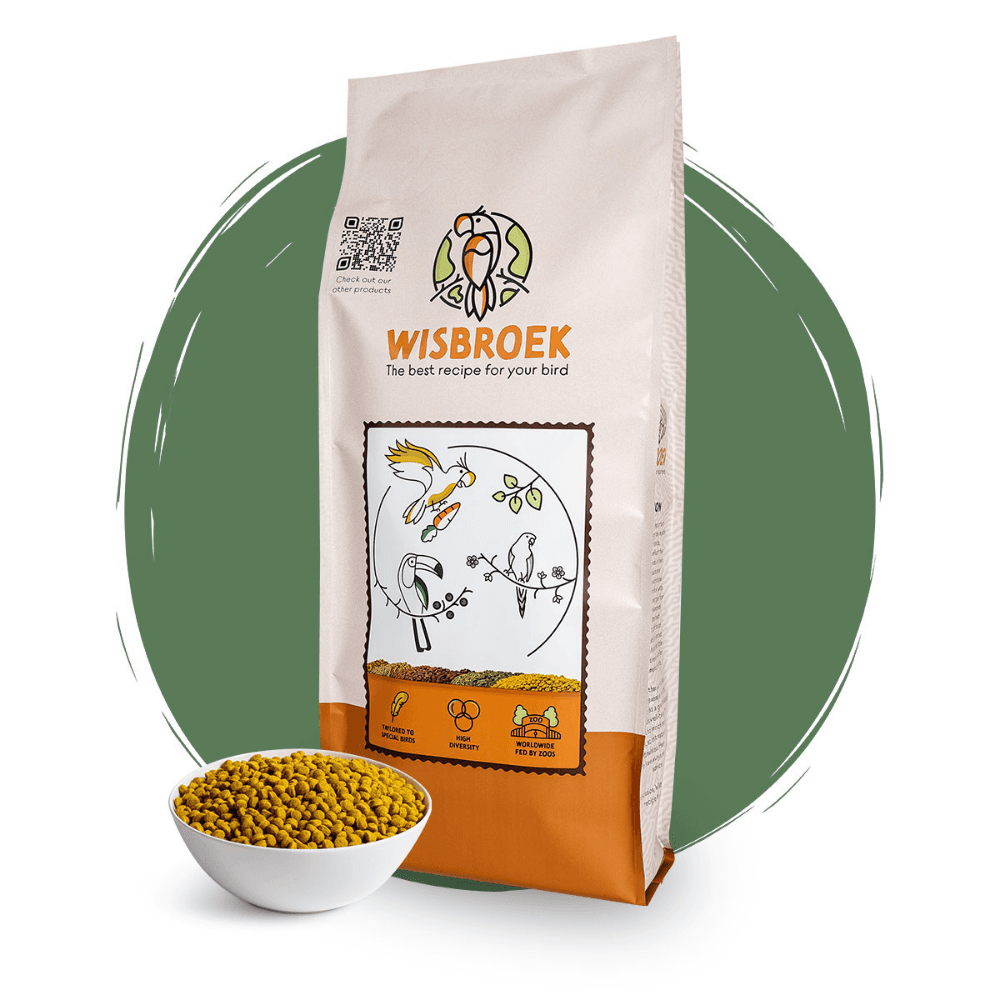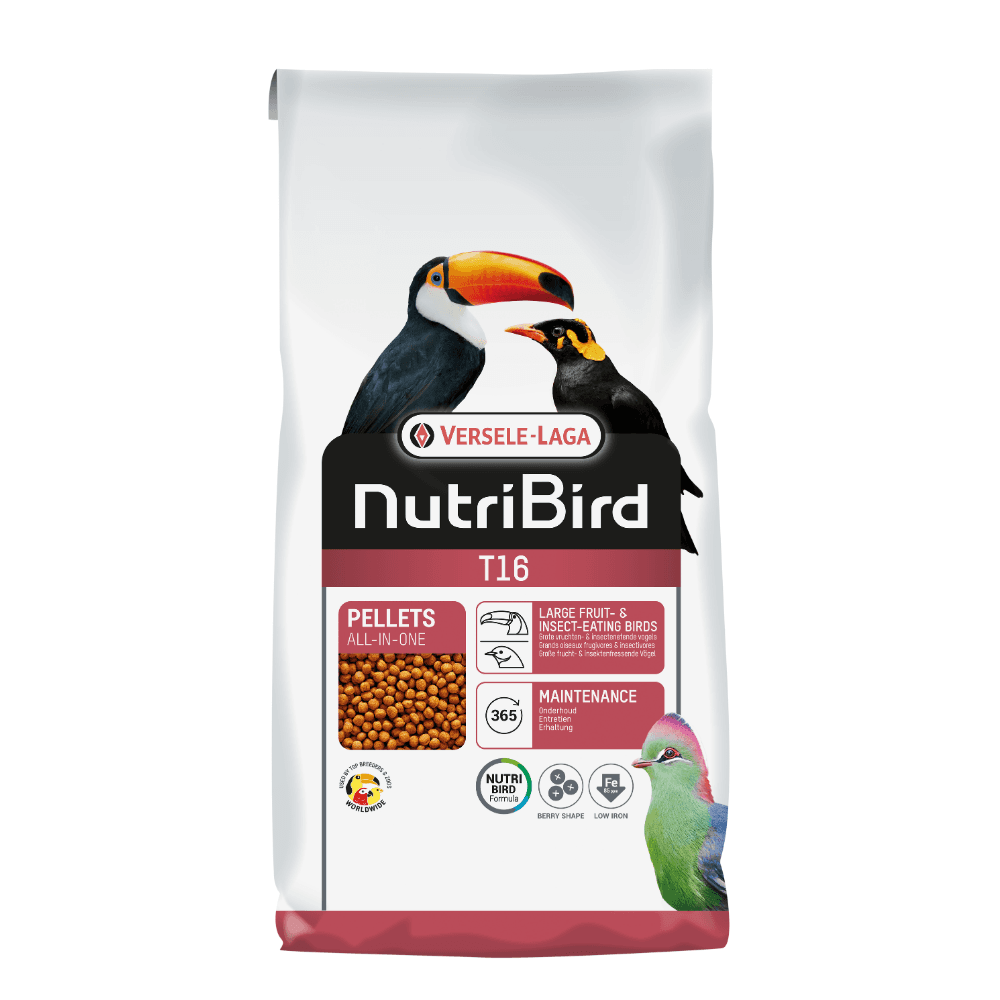
Success: Available from stock
More informationRhinoceros hornbill
Buceros rhinoceros
Natural diet Rhinoceros hornbill
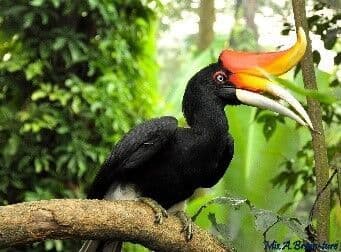
The rhinoceros hornbill is an omnivorous bird species that primarily feeds on fruits, with figs in particular. Next to this, it consumes insects, small vertebrates and occasionally carrion.
Feeding advice Rhinoceros hornbill
Feed quantity per day
5-15%
Sample percentage calculation
If an animal weighs 2.5 kg and eats 10% of its body weight, it will get
2.5 x 0.1 = 0.25 kg feed in total per day
Feed composition
5% Insects and other invertebrates
50% Concentrates
40% Other vegetables
5% Fruits
Proportions (fresh product)
0.05 x 0.25 kg = 13 g insects and other invertebrates
0.5 x 0.25 kg = 125 g concentrates
0.4 x 0.25 kg = 100 g other vegetables
0.05 x 0.25 kg = 13 g fruits
Feeding advice Rhinoceros hornbill
Feed quantity per day
5-15%
Sample percentage calculation
If an animal weighs 2.5 kg and eats 10% of its body weight, it will get
2.5 x 0.1 = 0.25 kg feed in total per day
Feed composition
5% Insects and other invertebrates
50% Concentrates
40% Other vegetables
5% Fruits
Proportions (fresh product)
0.05 x 0.25 kg = 13 g insects and other invertebrates
0.5 x 0.25 kg = 125 g concentrates
0.4 x 0.25 kg = 100 g other vegetables
0.05 x 0.25 kg = 13 g fruits
Diet Suggestions
Recommended
Concentrates
Variety of vegetables
In moderation
Variety of fruits
Variety of insects
Not recommended
Dog pellets
Sugar-rich fruits
Citrus fruits
Bread
Common diseases
An unbalanced diet may result in one of these more commonly occurring diseases/conditions:
- Iron storage disease
- Obesity
- Beak deformities
Additional advice
- Divide the “Feed quantity per day” over at least two feeding moments per day.
- Insoluble grit is not required if they go outside, as they will ingest small stones (read more about grit).
- Rhinoceros hornbills are sensitive to iron. Therefore, iron-rich products or diet components that increase iron retention in the liver (e.g. citrus fruits high in vitamin C) should be avoided.
- Avoid feeding bread and other high starch products as this may cause gastro-intestinal disturbances.
- Although present in their natural diets, feeding high levels of fruits might lead to gastro-intestinal disturbances because of the high sugar level and low fiber level in cultivated fruits compared to wild fruits (read more about nutritional values of (wild) fruits and vegetables).
- Stimulate foraging behaviour by using feeding puzzles and scatter feeding (read more about feed enrichment and foraging behaviour).
Diet Suggestions
Recommended
Concentrates
Variety of vegetables
In moderation
Variety of fruits
Variety of insects
Not recommended
Dog pellets
Sugar-rich fruits
Citrus fruits
Bread
Common diseases
An unbalanced diet may result in one of these more commonly occurring diseases/conditions:
- Iron storage disease
- Obesity
- Beak deformities